How to Build a Horse Feeding Plan: Step-by-Step Guide
Build a simple, forage-first feeding plan for your horse: estimate weight, set daily hay, add concentrate only if needed, schedule meals and track condition.
Feeding a horse well is less about clever products and more about getting the foundations right. A good plan puts forage first, meets the horse's needs for energy, protein, vitamins and minerals without excess, respects the way the equine gut works, and gets adjusted as the seasons and workload change. This guide walks you through building a straightforward plan for a healthy adult horse. If your horse has a medical condition, is pregnant, very young, very old or recovering from illness, work with your veterinarian or a qualified equine nutritionist; their advice comes first.
Principles behind every good feeding plan
- Forage is the foundation. Horses evolved to graze for most of the day. Hay and pasture should make up the majority of the diet.
- Little and often. The horse's stomach is small relative to its size, and its gut works best with a steady supply of fiber rather than two large meals.
- Change gradually. Introduce new hay, feeds or pasture over roughly 7 to 14 days to let the gut microbes adapt.
- Unlimited clean water and access to salt.
- Feed by weight, not volume. A scoop of one feed can weigh twice as much as a scoop of another.
Step 1: Know your horse
Start with an honest description of the horse you are feeding:
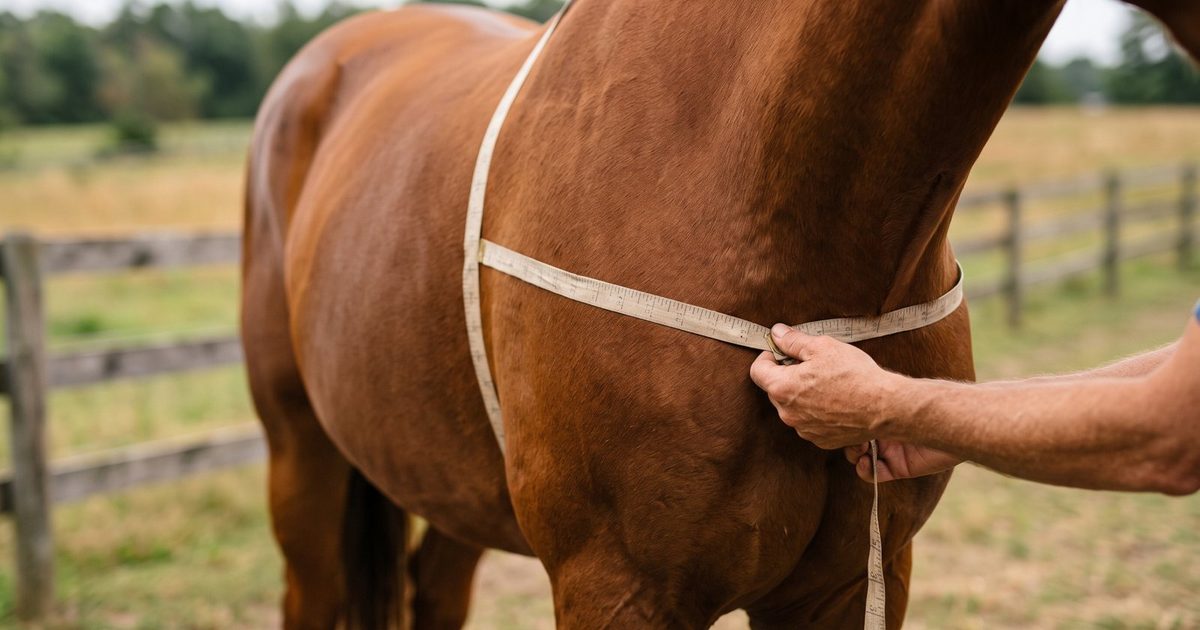
- Body weight: use a scale if you can, or the horse weight calculator with a tape. See our guide on weighing without a scale.
- Body condition score: on the common 1 to 9 scale, most riding horses do well around 5. Is your horse above or below that?
- Workload: maintenance (no regular work), light (a few hours of mostly walk and trot per week), moderate, or heavy.
- Type: is your horse an easy keeper that gains weight on air, or a hard keeper that struggles to hold condition?
- Turnout: how many hours a day on grass, and how good is the pasture?
Step 2: Set the daily forage amount
Most adult horses eat roughly 1.5 to 2.5% of their body weight per day in forage, with about 2% a common starting point. For a 1,100 lb horse at 2%, that is 22 lb of hay a day. If you expect about 10% waste, plan to put out around 24 lb. The hay calculator works this out and converts it to flakes and bales.
Choosing the right hay
Not all hay is equal. Grass hays such as timothy, orchardgrass or meadow hay are lower in energy and suit many easy keepers. Legume hays such as alfalfa (lucerne) are higher in energy, protein and calcium and are often used in smaller amounts for hard keepers or horses in heavier work. Whatever you choose, it should be clean, sweet smelling and free of mold and dust.
A forage analysis, done by sending a core sample of your hay to a lab, is the most reliable way to know what your hay provides. It costs relatively little compared with a winter's hay bill and takes much of the guesswork out of choosing concentrates and supplements.
Accounting for pasture
Pasture intake is hard to measure. A rough approach is to estimate the share of the day the horse spends grazing good grass and reduce hay accordingly, then watch body condition closely. Spring grass can be very rich; some horses need restricted grazing, so ask your vet if your horse is prone to weight gain or has had hoof problems.
Step 3: Decide whether you need concentrate
Many healthy adult horses at maintenance or in light work can meet their energy needs from good forage alone. What forage often does not provide is a complete set of vitamins and minerals, especially if hay is stored for months. There are three common routes:
| Option | Typical use |
|---|---|
| Ration balancer (small daily amount, often around 1 to 2 lb) | Easy keepers and horses in light work whose energy comes from forage |
| Complete or fortified feed fed at the label rate | Horses needing extra calories for work, growth or condition |
| Forage-based complete feed or soaked fiber | Horses that cannot chew long hay well, as directed by a vet |
Read the feed tag. Fortified feeds are designed to supply proper levels of vitamins and minerals only when fed at the recommended amount for your horse's weight. Feeding a quarter of the label rate of a fortified feed usually means the horse misses out, and that is where a ration balancer may be a better fit.
A common rule of thumb is to keep individual grain or concentrate meals modest, often no more than about 0.5% of body weight per meal (5 lb for a 1,000 lb horse), and to split larger amounts into several meals. Large starchy meals can upset the digestive system.
Step 4: Supplements and salt
Salt is a basic need. Provide a plain salt block or a measured amount of loose salt daily, especially for hay-fed horses and in hot weather. Beyond that, be cautious with supplements. Many horses receive several products with overlapping ingredients, which wastes money and can create imbalances. Before adding anything, ask what problem it is meant to solve, and check with your vet or nutritionist. We do not give supplement or medication dosing advice on this site.
Step 5: Build the daily schedule
Here is an example plan for a 1,100 lb gelding in light work, body condition 5, stabled at night with four hours of turnout on modest grass:
- 7:00 am: 6 lb hay; 1 lb ration balancer
- 8:00 am to 12:00 pm: turnout on pasture (hay reduced to account for grazing)
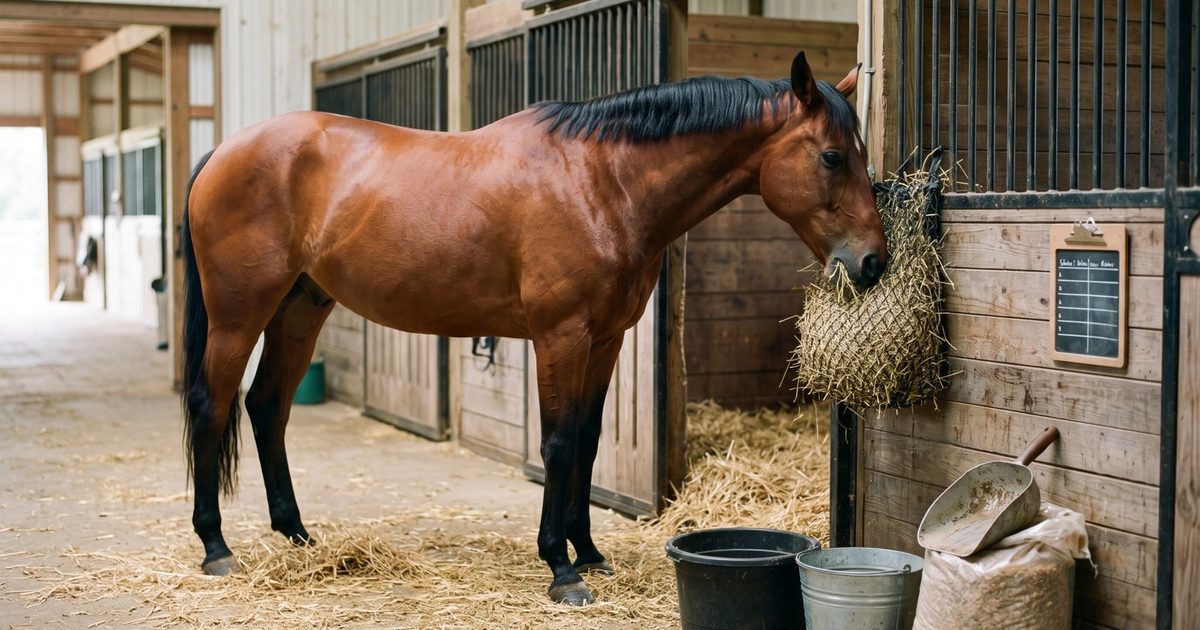
- 1:00 pm: 5 lb hay in a slow feeder net
- 6:00 pm: 5 lb hay; 1 lb ration balancer
- 9:00 pm: 5 lb hay in a slow feeder net to last the night
That is 21 lb of hay put out plus grazing, about 2% of body weight in forage overall. Water and salt are available at all times. Use the water intake estimator to size buckets, and the feed cost calculator to see what this plan costs per month.
Step 6: Monitor and adjust
A feeding plan is a starting point, not a finished product. Every two to four weeks, record weight and body condition. If the horse is gaining unwanted weight, first look at the energy density of the hay, the amount of grass and any concentrate, rather than cutting forage below about 1.5% of body weight. If the horse is losing condition, consider better quality forage, more of it, or a feed designed for extra calories, and ask your vet to check teeth and general health. Make every change gradually, and give each change a few weeks before judging it.
Seasonal changes
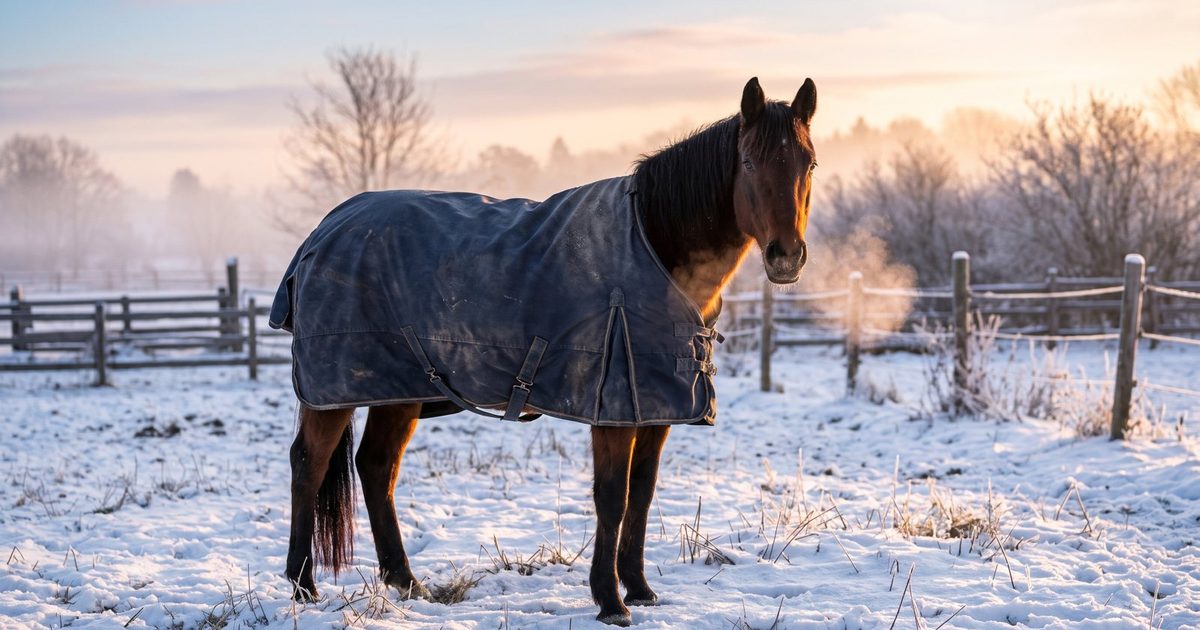
Many horses need more forage in cold weather, because digesting fiber produces body heat. Conversely, spring grass can add a lot of energy very quickly. Our winter guide covers cold weather feeding in more detail.
FAQ
How many times a day should I feed my horse?
Forage should be available for most of the day, and concentrates are usually split into at least two meals. More small meals are generally better than fewer large ones.
Is it bad to feed only hay?
Good hay can meet the energy needs of many horses, but it may not supply all vitamins and minerals. A ration balancer or a forage-matched supplement is a common way to fill the gaps; ask a nutritionist.
Should I soak my horse's hay?
Soaking or steaming is sometimes used to reduce dust or sugar content for particular horses. Discuss it with your vet, because it changes the nutrient content of the hay.
How quickly can I change my horse's feed?
Aim for about 7 to 14 days, replacing a small share of the old feed or hay with the new one every day or two.